
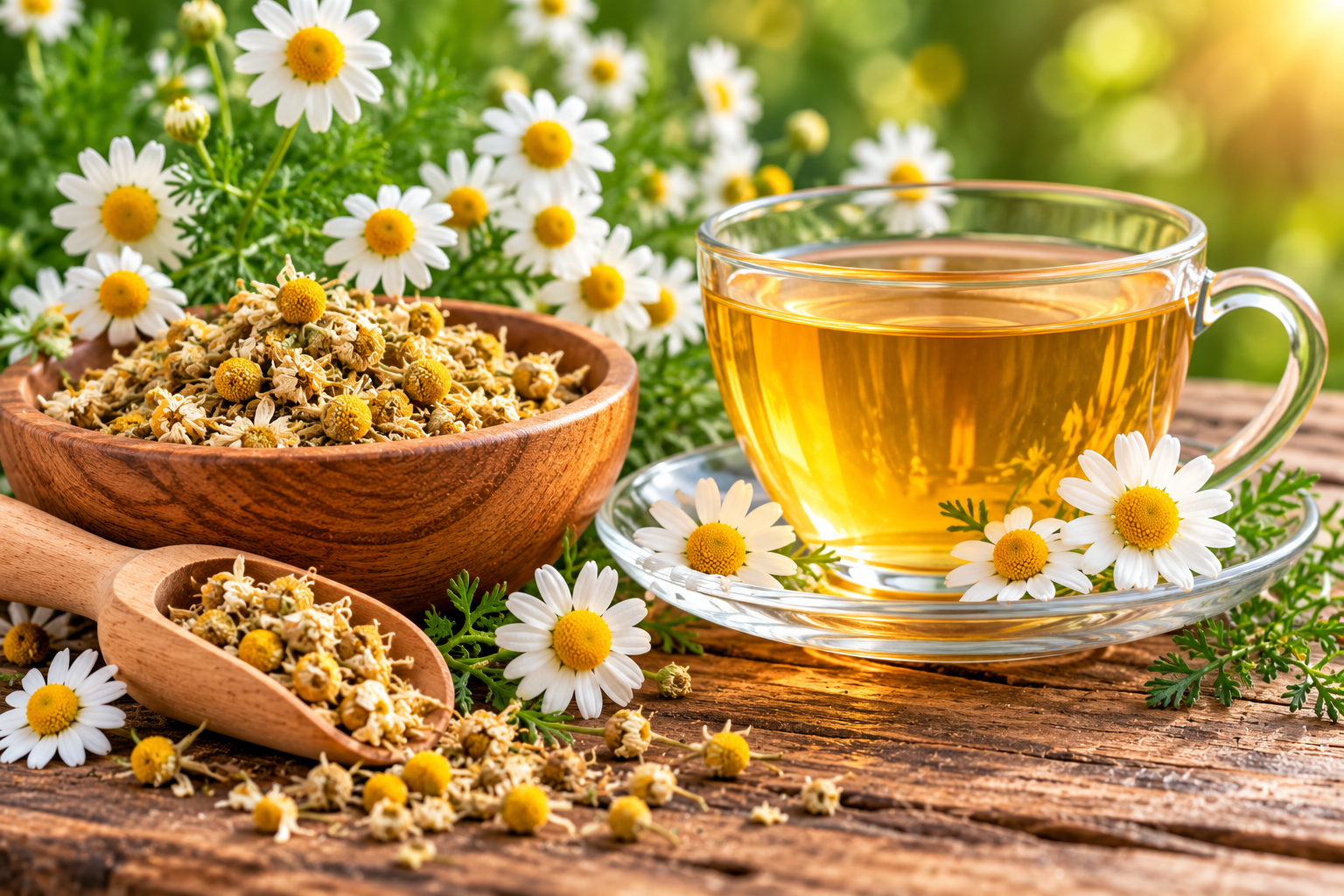
1. What Is Chamomile?
Chamomile is a flowering herb traditionally used in herbal teas and other preparations. It has a long history of use in traditional medicine, particularly for relaxation and sleep support.
Chamomile preparations vary and may include dried flowers, teas, extracts, oils, and topical products. Their composition and effects can differ depending on the species, preparation method, concentration, and route of administration.
According to Hieu and colleagues (2019), chamomile has attracted scientific interest because of its possible calming effects and potential applications in managing sleep disturbances and anxiety-related symptoms.
The researchers reviewed existing clinical trials to determine whether chamomile was effective and safe for state anxiety, generalized anxiety disorder (GAD), insomnia, and sleep quality.
2. How Was Chamomile Studied?
The researchers conducted a systematic review and meta-analysis of randomized and quasi-randomized trials involving human participants.
They searched 11 electronic databases and ultimately included 12 randomized controlled trials involving 965 participants: 479 in chamomile treatment groups and 486 in placebo groups.
The studies investigated different chamomile preparations and methods of administration, including oral preparations, inhalation, topical gel, and massage.
The researchers assessed outcomes using recognized clinical questionnaires and scales for anxiety, sleep quality, insomnia severity, and general psychological well-being.
This approach allowed the authors to combine results from several studies where appropriate. However, the studies differed in their methods, preparations, duration, and participants, which limited the certainty of some conclusions.
3. Chamomile and Sleep Quality
One of the most promising findings concerned sleep quality.
The researchers combined results from six randomized controlled trials investigating sleep quality. Their meta-analysis found a statistically significant improvement in sleep quality among participants receiving chamomile compared with placebo.
The reported standardized mean difference was −0.73, with a 95% confidence interval from −1.23 to −0.23.
In practical terms, this finding suggests that chamomile may help improve certain measures of sleep quality in some people.
However, the authors rated the overall quality of the evidence as low. Differences between studies and limitations in their design mean that the result should be interpreted cautiously.
Chamomile may therefore be considered a subject of interest in research on sleep support, but it cannot be guaranteed to improve sleep for everyone.
4. Chamomile and Generalized Anxiety Disorder
Generalized anxiety disorder is characterized by excessive and persistent worry that can interfere with everyday life.
The review found that chamomile showed promising results for some symptoms of GAD, particularly during short-term treatment.
Using the Hamilton Anxiety Rating Scale (HAM-A), the researchers found statistically significant improvements after two and four weeks of treatment.
- After two weeks: Mean difference of −1.43 points.
- After four weeks: Mean difference of −1.79 points.
However, the pooled results did not show a statistically significant improvement at eight weeks. The authors also reported limitations in the evidence for longer-term outcomes.
These findings suggest that chamomile may have potential for reducing certain anxiety symptoms, but the available research does not establish it as a replacement for psychological therapy or prescribed medication.
People experiencing persistent or severe anxiety should seek assessment from a qualified healthcare professional.
5. Does Chamomile Reduce Everyday Anxiety?
The researchers also investigated state anxiety, which refers to temporary anxiety experienced in response to a particular situation or perceived threat.
Their meta-analysis of three studies found no statistically significant difference between chamomile and placebo after four weeks.
The standardized mean difference was −0.15, with a 95% confidence interval from −0.46 to 0.16.
This means that the available evidence did not demonstrate a clear benefit of chamomile for reducing state anxiety.
Although some individual studies suggested possible improvements, the combined findings were insufficient to establish a reliable effect.
It is important to distinguish this outcome from generalized anxiety disorder because the two conditions involve different patterns of symptoms and may respond differently to interventions.
6. Can Chamomile Treat Insomnia?
Insomnia involves difficulty falling asleep, remaining asleep, or obtaining adequate restorative sleep.
Although chamomile is commonly associated with sleep support, the 2019 review found very limited clinical evidence for treating insomnia itself.
Only one included trial evaluated chamomile's effect on insomnia severity. It found no statistically significant improvement compared with placebo.
The researchers therefore concluded that the available evidence was insufficient to establish whether chamomile effectively treats insomnia.
People who experience persistent sleep difficulties should consider professional assessment to identify possible contributing factors and appropriate treatment options.
Healthy sleep habits and evidence-based interventions may be important components of managing ongoing sleep problems.
7. Safety and Possible Side Effects
Hieu and colleagues described chamomile as relatively well tolerated in the clinical trials they reviewed. However, some studies reported adverse events, including:
- Digestive discomfort, indigestion, nausea, or diarrhea.
- Drowsiness and fatigue.
- Headache and dizziness.
- Other symptoms reported in individual trials.
The review did not find statistically significant differences in adverse events between chamomile and placebo in the trials reporting these outcomes. Nevertheless, the limited number of studies and the quality of the available evidence mean that safety cannot be guaranteed for every person or preparation.
People with known allergies to chamomile or related plants should exercise caution. Those who are pregnant or breastfeeding, take medication, or have underlying health conditions should consult a qualified healthcare professional before using concentrated chamomile supplements or medicinal preparations.
Chamomile should not replace prescribed treatment for anxiety disorders or insomnia.
8. What Are the Limitations of the Research?
Although the findings are encouraging in some areas, the authors highlighted several important limitations.
First, relatively few studies were available for each outcome. Second, some trials had a high risk of bias, meaning that methodological weaknesses may have influenced the results.
The quality of the evidence ranged from very low to low across the outcomes assessed.
Furthermore, the studies used different chamomile preparations, doses, administration methods, and follow-up periods. Results from one preparation should not automatically be applied to every chamomile tea, extract, oil, or supplement.
The authors emphasized the need for larger, well-designed randomized controlled trials to confirm the findings and better establish effectiveness and safety.
9. Conclusion: What Should Consumers Know?
Chamomile is a traditional herb with potential applications in relaxation and sleep support. The systematic review by Hieu and colleagues (2019) found evidence suggesting improved sleep quality and short-term improvement in some symptoms of generalized anxiety disorder.
However, the review did not demonstrate a clear benefit for state anxiety, and the evidence for treating insomnia was insufficient.
Because the quality of the evidence was low or very low for several outcomes, these findings should be viewed as promising but not conclusive.
For consumers, the most responsible approach is to use herbal products cautiously, select quality-assured preparations, and seek professional advice when needed.
IRONFIBER LTD encourages evidence-informed nutrition and wellness choices, responsible use of herbal products, and consultation with qualified healthcare professionals for persistent anxiety or sleep problems.
Scientific Reference
Hieu, T. H., Dibas, M., Dila, K. A. S., Sherif, N. A., Hashmi, M. U., Mahmoud, M., Trang, N. T. T., Abdullah, L., Nghia, T. L. B., Y, M. N., Hirayama, K., & Huy, N. T. (2019). Therapeutic efficacy and safety of chamomile for state anxiety, generalized anxiety disorder, insomnia, and sleep quality: A systematic review and meta-analysis of randomized trials and quasi-randomized trials. Phytotherapy Research. https://doi.org/10.1002/ptr.6349
This article is for general health education and summarizes a scientific review published in 2019. It is not medical advice, and the findings do not establish chamomile as a proven treatment for anxiety disorders or insomnia.