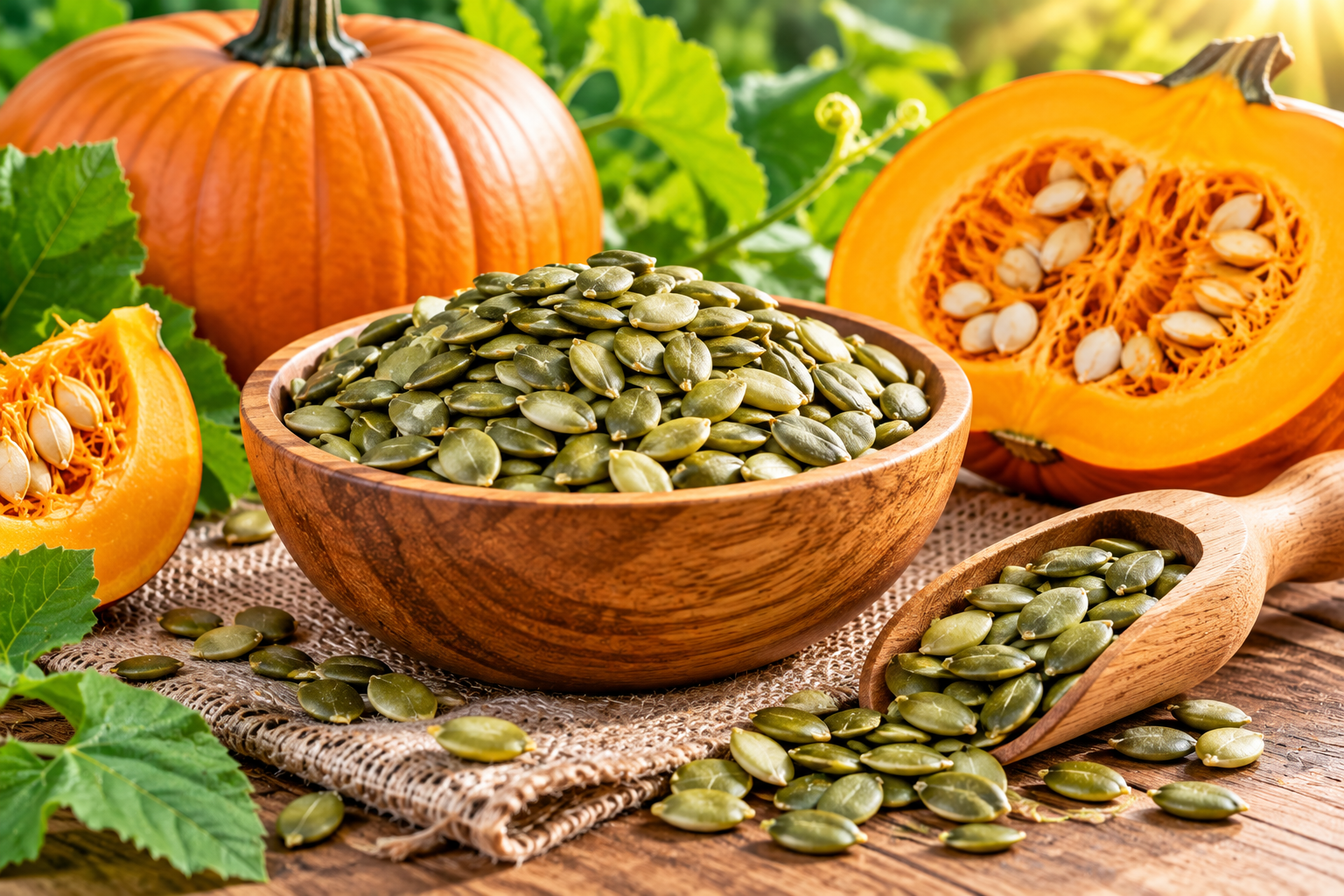
1. What Are Pumpkin Seeds?
Pumpkin seeds come from pumpkins belonging to the Cucurbita genus in the Cucurbitaceae family. They are commonly consumed as snacks or incorporated into a variety of foods.
According to Syed and colleagues (2019), pumpkin seeds have traditionally been eaten raw, cooked, or roasted in different parts of the world. They are also processed into pumpkin seed oil, protein ingredients, and other food products.
Despite their nutritional value, pumpkin seeds are sometimes discarded during pumpkin processing. Recovering and using these seeds can reduce food waste while creating opportunities to produce affordable, nutrient-rich foods.
2. Nutritional Value of Pumpkin Seeds
Pumpkin seeds provide a combination of macronutrients, micronutrients, and bioactive compounds that contribute to their nutritional value.
Protein
Pumpkin seeds are a concentrated source of plant protein. Protein supports the growth, maintenance, and repair of body tissues. Pumpkin seed powder can also be incorporated into selected foods to increase their protein content.
Healthy fats
Pumpkin seeds contain unsaturated fatty acids, including linoleic and oleic acids. They also contain other fatty acids and naturally occurring lipid compounds.
Because pumpkin seeds are energy-dense, portion size is important, particularly for people monitoring their total energy intake.
Dietary fiber
Pumpkin seeds provide dietary fiber, which contributes to normal digestive function and can support a balanced dietary pattern.
Minerals
The review highlights several minerals found in pumpkin seeds, including:
- Magnesium: Involved in muscle and nerve function, energy metabolism, and normal physiological processes.
- Iron: Needed for hemoglobin production and oxygen transport.
- Zinc: Supports normal immune function, wound healing, and many enzymatic processes.
- Phosphorus: Contributes to healthy bones and teeth and normal energy metabolism.
- Potassium: Helps maintain normal muscle function and fluid balance.
- Copper and manganese: Participate in various metabolic and enzymatic functions.
Vitamins and bioactive compounds
Pumpkin seeds contain vitamin E compounds, phytosterols, tocopherols, and phenolic compounds. These substances have attracted scientific interest because of their potential biological activities.
The precise nutritional composition varies with pumpkin variety, growing conditions, processing methods, and preparation. Consumers should refer to reliable product-specific nutritional information when comparing products.
3. Pumpkin Seeds and Antioxidant Activity
Antioxidants are compounds that can help protect biological systems against oxidative damage.
The 2019 review describes research investigating antioxidant activity in pumpkin seed oil and pumpkin seed protein. Researchers have examined compounds such as tocopherols and phenolic substances, as well as the ability of seed-derived components to neutralize free radicals in experimental settings.
Some of the studies discussed reported antioxidant activity in laboratory experiments and protective effects in animal models.
These findings help explain why pumpkin seeds are of interest in nutrition research. However, antioxidant activity demonstrated in a laboratory or animal study does not automatically prove that eating pumpkin seeds prevents or treats a particular disease in humans.
A varied diet containing nuts, seeds, vegetables, fruits, and other nutrient-rich foods remains a practical approach to obtaining a range of dietary antioxidants.
4. Potential Benefits for Heart and Metabolic Health
Pumpkin seeds have been investigated for their possible effects on blood lipids, blood pressure, and glucose metabolism.
Blood cholesterol and cardiovascular health
The review describes experimental studies in animals in which pumpkin seeds or pumpkin seed oil were associated with changes in blood lipid levels and markers related to cardiovascular function.
Pumpkin seeds contain unsaturated fats, magnesium, and other nutrients that can contribute to a balanced dietary pattern.
However, findings from animal studies cannot establish that pumpkin seeds or their oil independently lower cholesterol or prevent cardiovascular disease in humans. More high-quality human research is needed to determine the size and consistency of any specific benefits.
Blood pressure
Some animal studies reviewed by Syed and colleagues investigated pumpkin seed oil and blood pressure. The authors also discussed the possible contribution of magnesium to cardiovascular health.
These findings are promising research directions, but pumpkin seeds should not be considered a substitute for prescribed blood pressure medication or professional management of hypertension.
Blood glucose
The review discusses experimental studies investigating pumpkin seeds, pumpkin seed protein, and combinations of pumpkin and flax seeds for their possible effects on blood glucose.
Some findings were obtained in diabetic animal models. Although these studies provide a basis for further investigation, they do not prove that pumpkin seeds can treat diabetes or replace glucose-lowering medication.
People living with diabetes can consider pumpkin seeds as part of an individualized, balanced diet, taking account of portion size and overall carbohydrate and energy intake.
5. Pumpkin Seeds and Prostate Health
Pumpkin seeds and pumpkin seed oil have received research attention for their potential role in prostate health, particularly in relation to benign prostatic hyperplasia (BPH).
BPH is a non-cancerous enlargement of the prostate that may cause urinary symptoms, including frequent urination and difficulty emptying the bladder.
The review describes a clinical study involving men with symptomatic BPH that investigated pumpkin seed and saw palmetto oil. It also discusses animal research examining pumpkin seed oil and prostate enlargement.
These studies suggest that pumpkin-derived products may warrant further investigation. However, results from a combination of ingredients cannot establish the independent effect of pumpkin seeds, and findings from animal studies cannot be directly applied to humans.
Pumpkin seeds should not be promoted as a proven treatment for prostate enlargement or prostate cancer. Men experiencing urinary symptoms should seek medical assessment.
6. Other Research Areas
The 2019 review also explores several other potential applications of pumpkin seed components.
- Liver health: Some animal experiments investigated antioxidant effects of pumpkin seed protein and oil in models of liver injury.
- Inflammation: Experimental studies examined whether pumpkin seed oil and related compounds could influence inflammatory markers.
- Antimicrobial activity: Researchers investigated certain pumpkin seed oils and proteins for activity against selected microorganisms under laboratory conditions.
- Urinary stone formation: The review describes a study investigating pumpkin seed supplementation and urinary composition in children.
These areas remain research topics rather than established indications for treating human disease. In particular, laboratory antimicrobial effects do not mean that pumpkin seeds can treat infections, and findings from a small study should not be generalized to all people or conditions.
7. How to Include Pumpkin Seeds in Your Diet
Pumpkin seeds are versatile and can be incorporated into everyday meals in several ways.
As a snack: Eat plain or lightly roasted pumpkin seeds, choosing varieties with little or no added salt.
With breakfast: Sprinkle seeds over porridge, yogurt, or cereal.
In salads: Add pumpkin seeds to vegetable salads for extra texture, protein, and unsaturated fats.
In baking: Incorporate them into homemade bread, muffins, crackers, or other baked foods.
**As a food ingredient, pumpkin seed flour or powder can be used in selected recipes to increase their protein and mineral content.
As pumpkin seed oil: The oil can be used in suitable culinary applications, such as salad dressings, according to the product's instructions.
Because pumpkin seeds are energy-dense, a practical starting portion for many adults is around 25–30 grams, adjusted to individual energy needs and dietary requirements. People with seed allergies should avoid them.
8. Pumpkin Seeds and Sustainable Food Innovation
An important theme in the reviewed article is the potential to transform pumpkin seeds from an underused by-product into valuable food ingredients.
Food manufacturers can explore pumpkin seed powder, roasted seeds, seed butter, oil, protein ingredients, and fortified food formulations.
The review's Figure 1 on page 2 illustrates possible processing routes for obtaining bioactive components from pumpkin seeds and pumpkin pulp. These include water-based extraction, enzymatic extraction, alkaline extraction, germination, and oil extraction.
Such approaches may help create value from pumpkin-processing residues. However, commercial product development requires appropriate food safety controls, nutritional analysis, processing validation, and compliance with applicable labeling and regulatory requirements.
For food businesses, pumpkin seeds offer an opportunity to connect nutrition, product innovation, and more efficient use of agricultural resources.
9. Conclusion
Pumpkin seeds are nutrient-dense foods that provide plant protein, unsaturated fats, fiber, minerals, and bioactive compounds. They can contribute to a varied and balanced diet and can be used in snacks, bakery products, cereals, salads, seed butter, and oil.
The scientific review by Syed and colleagues (2019) highlights promising research on antioxidant activity and potential cardiovascular, metabolic, and prostate health applications. However, many therapeutic findings discussed in the review come from laboratory experiments or animal studies, so they should not be interpreted as proof that pumpkin seeds treat or prevent disease in humans.
For consumers, the most practical approach is to enjoy pumpkin seeds as part of a balanced diet. For food manufacturers, they represent a promising ingredient for developing nutritious products and reducing food waste.
IRONFIBER LTD supports informed nutrition choices, responsible use of food-based ingredients, and innovation in functional foods.
Scientific Reference
Syed, Q. A., Akram, M., & Shukat, R. (2019). Nutritional and therapeutic importance of the pumpkin seeds. Biomedical Journal of Scientific & Technical Research, 21(2). [https://doi.org/10.26717/BJSTR.2019.21.003586](https://doi.org/10.26717/BJSTR.2019.21.003586)
This article is for general nutrition education and is based on a scientific review published in 2019. It is not medical advice. The health applications discussed require interpretation according to the type and quality of evidence available.*