1. What Is Red Meat?
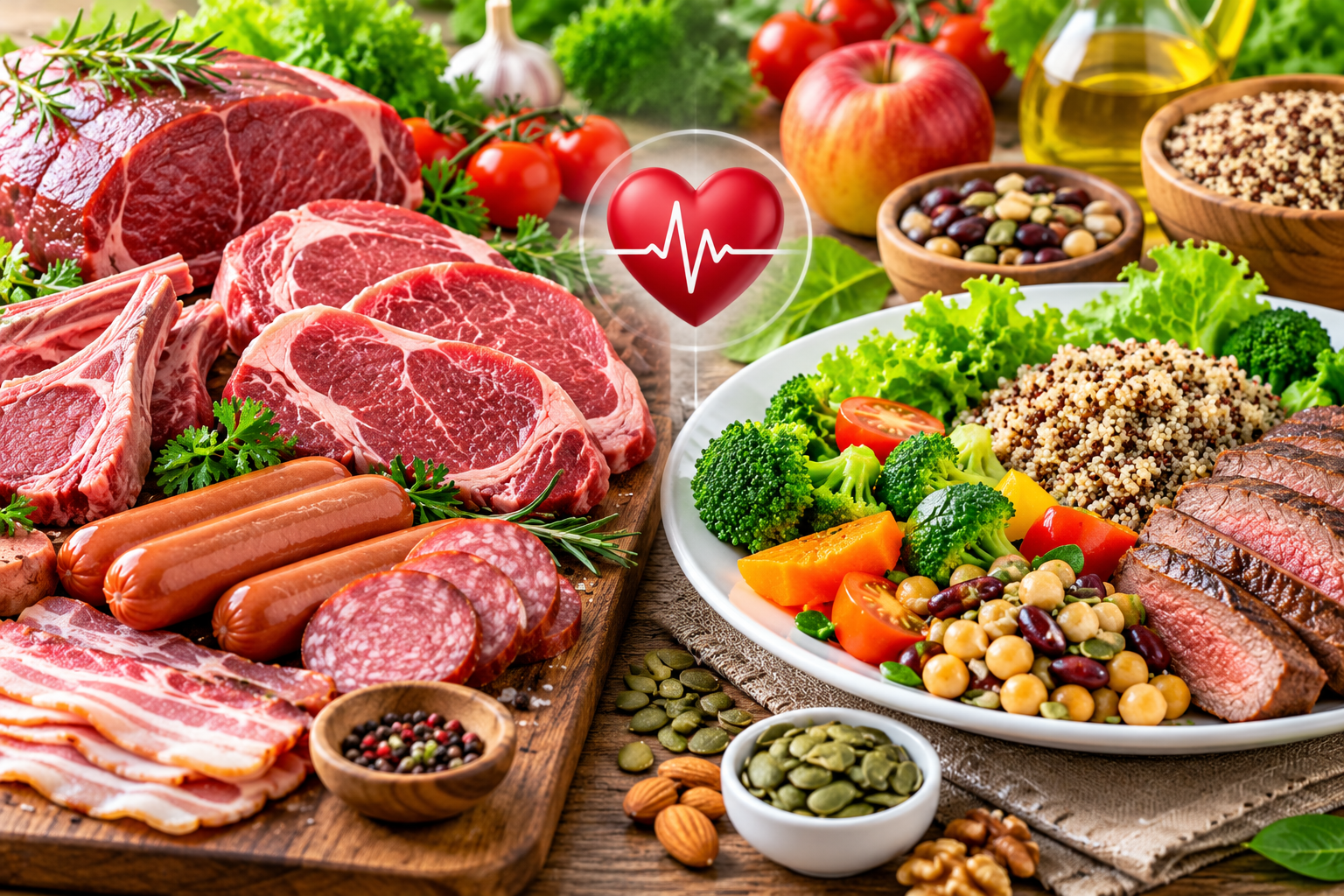
Red meat is meat from animals such as cattle, pigs, sheep, and goats. Examples include beef, veal, pork, lamb, and mutton.
Red meat is an important source of nutrients. It provides protein-containing essential amino acids, vitamin B12, iron, zinc, and other micronutrients that support normal body functions.
However, the health implications of eating red meat depend on several factors, including the amount consumed, the type of meat, how it is processed, cooking methods, and the overall quality of the diet.
In the scientific review Potential Health Hazards of Eating Red Meat, published in the Journal of Internal Medicine, Wolk examined evidence from prospective cohort studies and meta-analyses investigating the relationship between red meat consumption and major chronic diseases.
The review concluded that high consumption of red meat, particularly processed meat, was associated with increased risks of several chronic diseases and premature mortality.
2. Processed Meat Versus Unprocessed Red Meat
Understanding the difference between these two categories is essential for making informed food choices.
Unprocessed red meat
This includes fresh beef, pork, lamb, and other red meat that has not undergone preservation processes such as curing, smoking, or adding chemical preservatives.
Unprocessed red meat supplies protein, iron, zinc, and vitamin B12. Nevertheless, the review found that high consumption was associated with increased risks of some health outcomes, although the strength of evidence varied by disease.
Processed red meat
Processed meat has undergone methods such as curing, smoking, salting, or adding preservatives to improve shelf life, taste, color, or texture.
Examples include
- Bacon
- Sausages
- Ham
- Salami
- Frankfurters and hot dogs
According to Wolk’s review, processed meat generally contains more sodium and nitrites or nitrates than unprocessed red meat.
The review found more consistent evidence of associations between processed meat consumption and adverse health outcomes than for unprocessed red meat.
Practical message: When choosing meat, consider reducing processed meat first and avoiding making it a daily dietary staple.
3. Red Meat and Type 2 Diabetes
Type 2 diabetes is a chronic condition in which the body does not use insulin effectively or cannot produce enough insulin to maintain normal blood glucose levels.
The review reported that several prospective studies and meta-analyses found an association between higher red meat consumption, especially processed meat, and an increased risk of type 2 diabetes.
The proposed explanations include several substances naturally present in meat or introduced during processing and cooking, such as hem iron, sodium, nitrites, and compounds produced at high cooking temperatures.
The review also discussed advanced glycation end-products, which can form during high-temperature cooking and have been investigated for their potential role in oxidative stress and inflammation.
However, the exact biological mechanisms remain uncertain, and observational associations do not by themselves establish that red meat directly causes diabetes.
What can consumers do?
- Eat a varied diet that includes vegetables, fruits, whole grains, legumes, and other fiber-rich foods.
- Limit frequent consumption of processed meats.
- Choose appropriate portions of protein-rich foods.
- Maintain regular physical activity and follow recommended diabetes screening and care.
People with diabetes should follow individualized dietary advice from a qualified healthcare professional.
4. Red Meat and Cardiovascular Health
Cardiovascular diseases affect the heart and blood vessels and include coronary heart disease and stroke.
Wolk’s review reported associations between higher processed meat consumption and increased risks of several cardiovascular outcomes. Findings for unprocessed red meat were less consistent.
For example, the review’s summary of meta-analyses reported that each additional 50 grams of processed meat consumed per day was associated with approximately:
- 13% higher relative risk of stroke
- 42% higher relative risk of coronary heart disease in one pooled analysis
- 24% higher relative risk of cardiovascular mortality
These estimates come from the observational studies and meta-analyses available to the author at the time of publication. They describe relative associations, not the absolute probability that an individual will develop a disease.
The review also noted that processed meat tends to contain considerably more sodium than unprocessed red meat. High sodium intake is relevant to blood pressure and cardiovascular health, although the precise contribution of different meat components remains uncertain.
To support cardiovascular health, consumers can reduce processed meat, choose a variety of protein sources, eat more vegetables and legumes, and maintain a balanced dietary pattern.
5. Red Meat and Cancer Risk
The relationship between red meat, processed meat, and cancer was an important focus of the review.
Wolk discussed evidence concerning colorectal cancer and several other cancer types. Proposed mechanisms included the effects of hem iron, the formation of N-nitroso compounds, and chemicals generated when meat is cooked at very high temperatures.
The review also described the International Agency for Research on Cancer’s 2015 assessment, which concluded that there was sufficient evidence in humans for the carcinogenicity of processed meat, while the evidence for unprocessed red meat was classified as limited.
This distinction is important: processed meat and unprocessed red meat are not supported by exactly the same level of evidence.
The review reported that an additional 50 grams of processed meat per day was associated with approximately an 18% higher relative risk of colorectal cancer in the meta-analysis it cited.
This does not mean that every person who eats processed meat will develop cancer. Cancer risk is influenced by many factors, including age, genetics, smoking, alcohol consumption, physical activity, body weight, and overall dietary patterns.
Practical recommendation: Limit processed meat and avoid routinely burning or charring meat over an open flame. Choose a variety of foods that support a balanced diet.
6. Does Red Meat Affect Life Expectancy?
The review also examined all-cause mortality, meaning death from any cause.
In a meta-analysis of nine prospective cohorts involving more than 1.3 million participants, processed meat consumption was associated with increased all-cause mortality.
The review reported an approximately 22% higher relative risk when comparing consumption of 60 grams of processed meat per day with 10 grams per day in the dose-response analysis it cited.
Evidence concerning unprocessed red meat was less consistent across populations.
These findings support the importance of considering both the type and quantity of meat consumed. However, they should be interpreted in the context of the limitations of observational research, including dietary measurement errors and other lifestyle factors that may influence health outcomes.
7. How Does Meat Production Affect the Environment?
Wolk’s review also considered the environmental burden associated with red meat production.
Producing red meat requires land, water, animal feed, and energy, and it contributes to environmental impacts such as greenhouse gas emissions.
Dietary choices can therefore influence both human health and environmental sustainability.
Including more legumes, beans, peas, and other plant-based protein sources can help diversify the diet. These foods also provide nutrients and dietary fiber, which are important components of healthy eating.
A balanced approach does not require every person to eliminate meat. Rather, it encourages consumers to consider dietary variety, portion sizes, food quality, and the broader impact of their food choices.
8. Practical Tips for Healthier Meat Consumption
The following steps can help consumers make informed dietary choices:
1. Reduce processed meat. Avoid relying on sausages, bacon, ham, and other processed meats as everyday protein sources.
2. Diversify protein sources. Include beans, peas, lentils, nuts, seeds, eggs, fish, and other suitable protein-rich foods.
3. Choose appropriate portions. Avoid making large servings of red meat the main feature of every meal.
4. Use sensible cooking methods. Avoid routinely burning or heavily charring meat, particularly over an open flame.
5. Eat more plant foods. Include vegetables, fruits, whole grains, and legumes regularly.
6. Consider your individual needs. People with iron deficiency, increased nutritional requirements, or specific medical conditions may need individualized dietary advice rather than a blanket restriction on all red meat.
7. Focus on the whole dietary pattern. A person's overall diet and lifestyle matter more than a single food considered in isolation.
9. Conclusion
Red meat provides valuable nutrients, including protein, vitamin B12, iron, and zinc. Nevertheless, the scientific review by Wolk (2017) found that high consumption of red meat, particularly processed meat, was associated with increased risks of several chronic diseases and premature mortality.
The findings were generally more consistent for processed meat than for unprocessed red meat. Because the review primarily evaluated observational evidence, the reported associations should not automatically be interpreted as proof of causation for every health outcome.
For consumers, a practical approach is to limit processed meat, vary protein sources, eat more plant foods, and avoid routinely charring meat at high temperatures.
IRONFIBER LTD encourages evidence-informed nutrition choices that support human health, dietary diversity, and responsible food consumption.
Scientific Reference
Wolk, A. (2017). Potential health hazards of eating red meat. Journal of Internal Medicine, 281(2), 106–122. [https://doi.org/10.1111/joim.12543](https://doi.org/10.1111/joim.12543)
This article is intended for general nutrition education. It summarizes a scientific review published in 2017 and does not replace individualized dietary or medical advice. The evidence and dietary guidelines may have evolved since the review was published.