Introduction
Sorghum, millet, maize, and other cereals are important sources of energy, dietary fiber, plant protein, and essential nutrients. They are widely consumed in African countries as porridge, flour, ugali, and other traditional foods.
However, these cereals naturally contain certain compounds known as antinutrients. Some antinutrients can reduce the body's ability to absorb important minerals, particularly iron, zinc, and calcium, depending on the type of cereal, food preparation method, and overall diet.
When sorghum is mixed with other cereals, the nutritional benefits can increase through dietary diversity. However, combining cereals does not automatically eliminate antinutrients. Understanding how to prepare these foods properly can help improve their nutritional quality.
1. What Are Antinutrients?
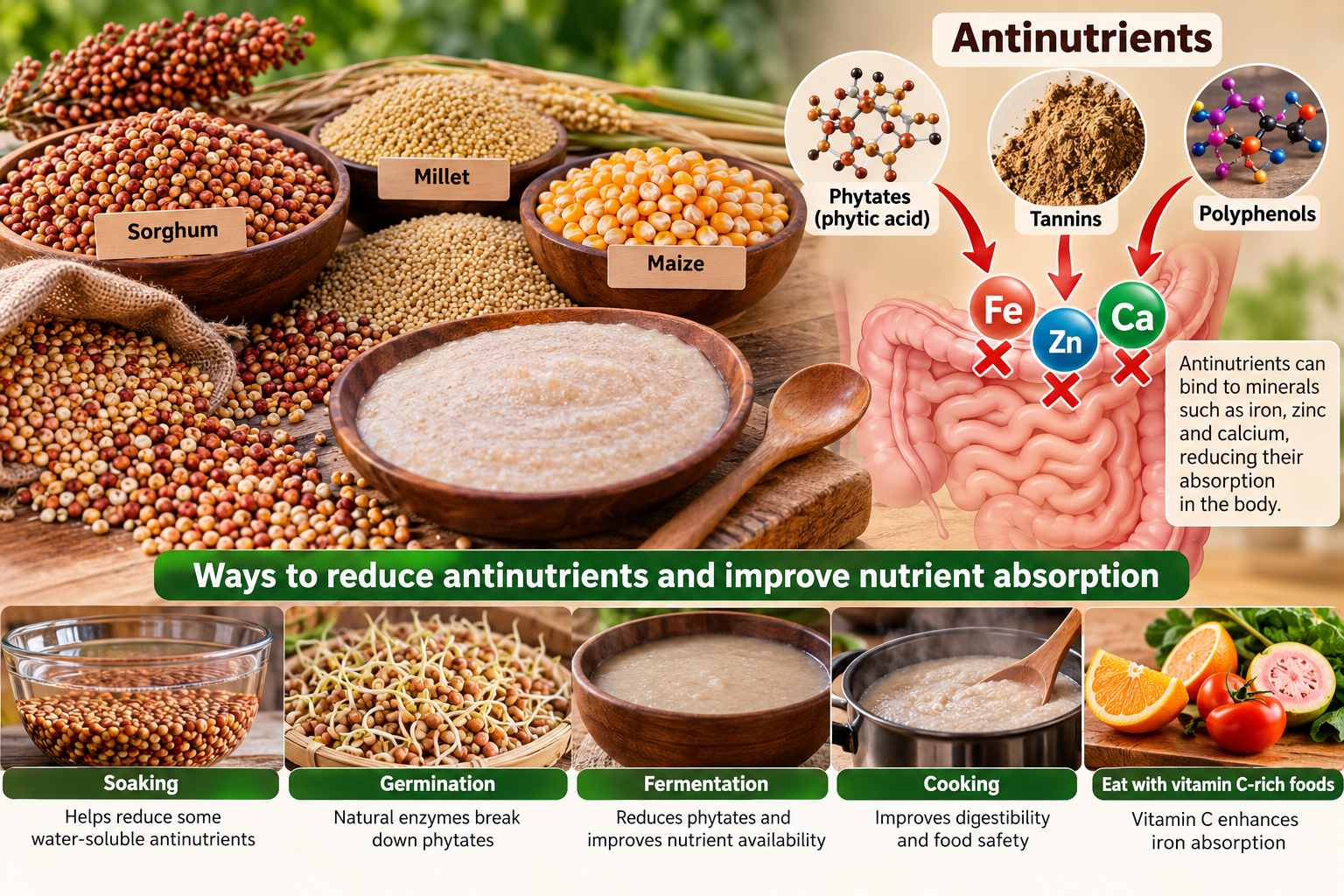
Antinutrients are naturally occurring compounds in plants that can interfere with the digestion or absorption of certain nutrients. Plants produce many of these compounds as part of their natural defence mechanisms.
The main antinutrients found in sorghum and other cereals include:
Phytates (phytic acid)
Phytates are found mainly in the outer layers of cereal grains. They can bind to minerals such as iron, zinc, and calcium in the digestive tract, making these minerals less available for absorption.
Tannins
Certain sorghum varieties, particularly some with pigmented grains, contain tannins. These compounds can bind to proteins and reduce the absorption of non-haem iron from plant-based foods.
Other polyphenols
Polyphenols are natural plant compounds with antioxidant properties. Some polyphenols can reduce non-haem iron absorption, although their effects depend on the type and amount consumed.
It is important to understand that not all plant compounds are harmful. Some polyphenols may offer health benefits, and the nutritional effect of a food depends on the balance between beneficial compounds and their potential effects on nutrient availability.
2. How Do Antinutrients Affect Nutrient Absorption?
The effects of antinutrients depend on the food composition, processing methods, portion sizes, and the individual's nutritional status.
- Iron: Phytates and some polyphenols can reduce the absorption of non-haem iron, which is the type of iron found in cereals, legumes, and vegetables.
- Zinc: Phytates can bind zinc and reduce its absorption.
- Calcium: Phytates may also reduce calcium availability, although the overall effect depends on the dietary context.
- Protein: Tannins may interact with proteins and digestive enzymes, potentially reducing protein digestibility.
These effects are particularly relevant when cereal-based foods make up a large proportion of the diet and the diet contains few other sources of bioavailable minerals.
For example, women of reproductive age, pregnant women, and young children have important iron requirements. Improving the availability of iron in their diets is therefore an important nutrition priority.
3. Does Mixing Sorghum with Other Cereals Increase Antinutrients?
Mixing sorghum with millet, maize, or other cereals does not necessarily increase the total amount of antinutrients in a meal. The effect depends on the type and proportion of each grain and how the mixture is processed.
For example, mixing sorghum with millet may provide a broader range of nutrients, but both grains can contain phytates. If the combined flour is consumed without appropriate processing, mineral absorption may remain limited.
On the other hand, combining cereals with legumes, fruits, vegetables, and other nutrient-rich foods can improve the overall nutritional quality of the diet.
The key message is that cereal mixing can improve dietary diversity, but it should be combined with appropriate processing and a balanced diet to support better nutrient availability.
4. How Can You Reduce Antinutrients in Sorghum and Millet?
Several traditional and scientifically supported food-processing methods can help reduce certain antinutrients.
A. Soaking
Soaking whole or coarsely ground grains in clean water can help reduce some water-soluble antinutrients and may activate natural enzymes under suitable conditions.
- Clean and sort the grains.
- Soak them in potable water in a clean container.
- Discard the soaking water and rinse the grains before further processing.
- Avoid prolonged soaking at room temperature, especially in hot weather, because harmful microorganisms can grow.
Soaking alone may have a limited effect on phytates because these compounds are not always readily removed by water.
B. Germination or malting
Germination occurs when a grain begins to sprout under controlled moisture and temperature conditions. During germination, natural enzymes, including phytase, can break down some phytates.
A practical process involves cleaning the grains, soaking them, draining them, allowing them to germinate under hygienic conditions, and then drying them thoroughly before milling.
Germination can also change the grain's enzyme activity and nutritional composition. The degree of antinutrient reduction depends on the grain variety and processing conditions.
C. Fermentation
Fermentation can reduce phytates and improve the availability of certain nutrients, depending on the microorganisms, acidity, time, and processing method.
Fermented cereal porridges are common in many African communities. Using a safe, controlled fermentation process may improve the nutritional quality of sorghum- and millet-based foods.
D. Cooking
Cooking is essential for food safety, digestibility, and palatability. However, ordinary cooking may not remove all phytates because they are relatively heat-stable.
Combining cooking with soaking, germination, or fermentation may produce better results than relying on cooking alone.
5. Combine Cereals with Vitamin C-Rich Foods
One practical way to improve iron absorption is to consume plant-based iron sources alongside foods rich in vitamin C.
Examples include:
- Sorghum porridge served with an orange or another vitamin C-rich fruit.
- Millet-based meals accompanied by tomatoes or fresh vegetables.
- Cereal meals eaten with guava, papaya, or other locally available vitamin C-rich fruits.
Vitamin C enhances non-haem iron absorption and can partly counteract the inhibitory effects of phytates and certain polyphenols in a meal.
For women of reproductive age, combining appropriate cereal processing with vitamin C-rich foods can be one useful dietary strategy to support iron nutrition. However, people with iron deficiency or anemia may also need clinical assessment and treatment.
6. What Does This Mean for community?
In community, sorghum, maize, and millet can contribute to household food security and dietary diversity. Improving the preparation of these grains may help households make better use of the nutrients they contain.
Farmers, food processors, nutrition professionals, and food businesses can promote improved cereal processing practices, including hygienic soaking, germination, fermentation, and proper drying.
For businesses developing cereal flours and blended porridge products, it is important to evaluate the nutritional composition and processing performance of the final product rather than assume that mixing grains automatically improves mineral absorption.
Where possible, laboratory analysis can help determine the phytate content, mineral composition, moisture level, and microbiological safety of processed cereal products.
Conclusion
Sorghum and other cereals are valuable components of a balanced diet, but antinutrients such as phytates and certain tannins can reduce the bioavailability of essential minerals, particularly iron and zinc.
The solution is not to avoid sorghum or millet, but to process and combine them wisely. Soaking, germination, fermentation, proper cooking, and eating cereal-based meals with vitamin C-rich foods can help improve the nutritional value of these foods.
At IRONFIBER LTD, we believe that nutrition education, responsible food processing, and evidence-based product development are important steps toward improving dietary quality and supporting better nutrition in Rwanda.
References
1. Hurrell, R. F., & Egli, I. (2010). Iron bioavailability and dietary reference values. The American Journal of Clinical Nutrition, 91(5), 1461S–1467S. https://doi.org/10.3945/ajcn.2010.28674F
2. Gibson, R. S., Bailey, K. B., Gibbs, M., & Ferguson, E. L. (2010). A review of phytate, iron, zinc, and calcium concentrations in plant-based complementary foods used in low-income countries and implications for bioavailability. Food and Nutrition Bulletin, 31(2 Suppl), S134–S146. https://doi.org/10.1177/15648265100312S206
3. Hotz, C., & Gibson, R. S. (2007). Traditional food-processing and preparation practices to enhance the bioavailability of micronutrients in plant-based diets. The Journal of Nutrition, 137(4), 1097–1100. https://doi.org/10.1093/jn/137.4.1097