1. What Is Spirulina?
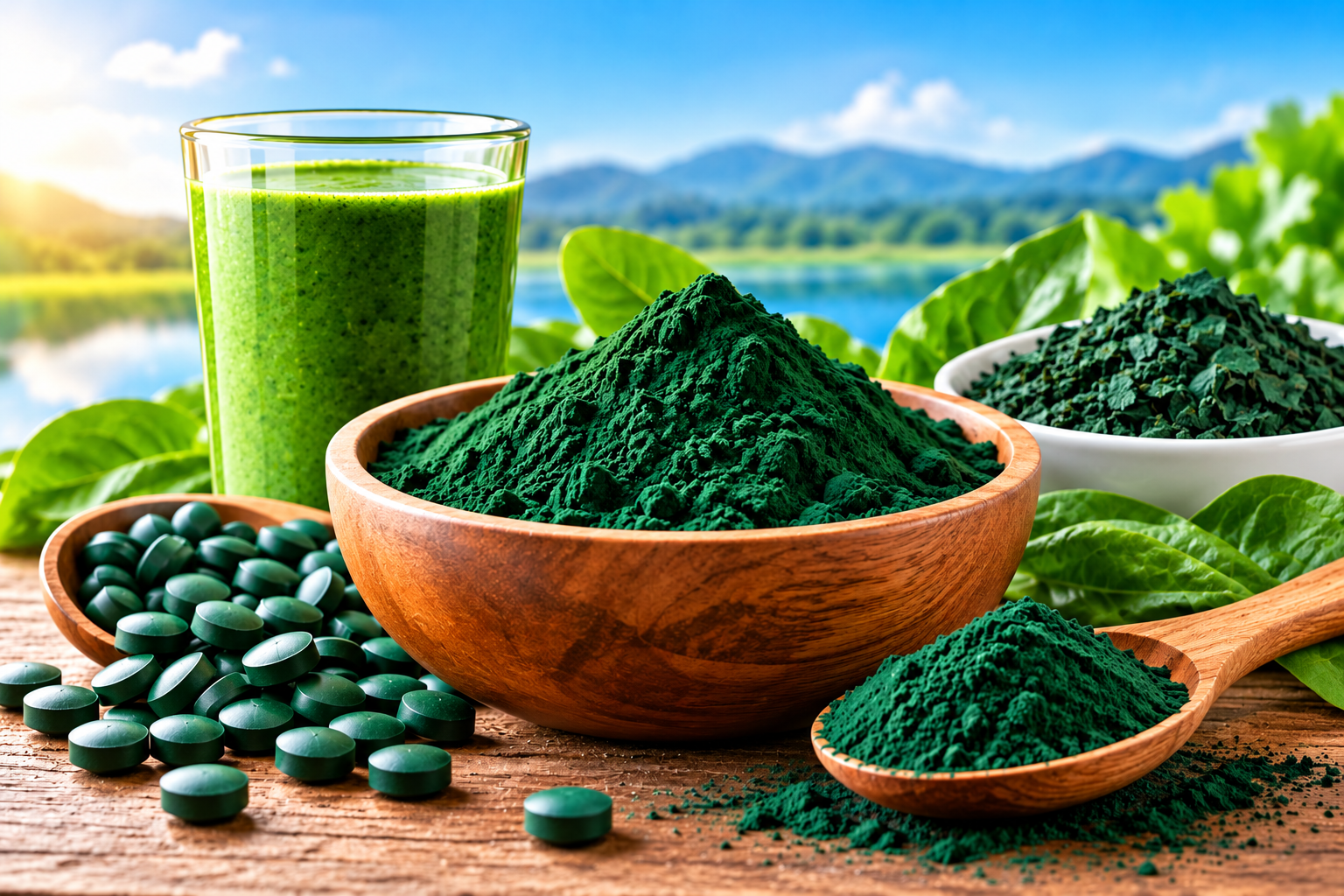
Spirulina is a blue-green microorganism commonly associated with the genus Arthrospira. It grows under suitable aquatic conditions and has attracted attention as a source of nutrients and bioactive compounds.
According to Wang and colleagues (2023), spirulina has a long history of use as food and is now widely studied for its nutritional composition and potential applications in the food, healthcare, pharmaceutical, and cosmetics industries.
Spirulina is available in different forms, including powder, tablets, capsules, and extracts. Its powder can be incorporated into selected foods and beverages, making it a versatile ingredient for functional food development.
2. What Nutrients Does Spirulina Contain?
One of the main reasons spirulina attracts scientific and commercial interest is its concentrated nutritional composition.
Protein
Spirulina is known for its high protein content. The 2023 review reports values of approximately 60–70% of dry weight in its abstract, although the amount varies according to species, cultivation conditions, and processing methods. Protein contributes to normal growth, tissue maintenance, and repair.
Essential fatty acids
Although spirulina is relatively low in total fat, it contains unsaturated fatty acids. The review discusses gamma-linolenic acid (GLA) and other fatty acids investigated for their potential biological activities.
Vitamins and carotenoids
Spirulina contains carotenoids, including beta-carotene, which the body can convert into vitamin A. Vitamin A contributes to normal vision, immune function, and the maintenance of healthy skin.
Minerals
Spirulina contains various minerals. However, the exact amount of each mineral depends on the product and its production conditions. Consumers should consult the product's nutritional information rather than assume that all spirulina products provide the same quantities.
Chlorophyll and phycocyanin
Chlorophyll contributes to spirulina's green colour, while phycocyanin is a blue pigment-protein responsible for its distinctive blue-green appearance. Phycocyanin has attracted research interest because of its antioxidant and anti-inflammatory activities in experimental studies.
Together, these nutrients and bioactive compounds make spirulina an interesting ingredient for nutritional supplements and functional foods.
3. Potential Health Benefits: What Does Research Suggest?
Researchers have investigated spirulina for several possible health applications. It is important to distinguish experimental findings from benefits that have been firmly established in humans.
Antioxidant properties
Oxidative stress occurs when the production of reactive molecules exceeds the body's ability to manage them. This process is associated with cellular damage and has been studied in relation to several chronic conditions.
The 2023 review describes laboratory and experimental research suggesting that spirulina compounds, including phycocyanin, carotenoids, and polysaccharides, may help neutralize free radicals and reduce certain markers of oxidative damage.
These findings are promising, but laboratory antioxidant activity does not automatically demonstrate prevention or treatment of disease in humans. Further clinical research is needed to establish the practical health benefits.
Anti-inflammatory activity
Some spirulina-derived compounds have demonstrated anti-inflammatory effects in laboratory experiments and animal studies. Researchers have investigated their influence on inflammatory mediators and other biological pathways.
These findings provide a basis for further investigation into spirulina's potential applications. However, spirulina should not be promoted as a proven treatment for inflammatory diseases.
Immune function
Spirulina contains nutrients and bioactive compounds that researchers have studied for their possible effects on immune responses.
The review discusses experimental findings involving phycocyanin, carotenoids, and spirulina polysaccharides. Some studies have reported changes in immune-cell activity and other immune-related markers.
Nevertheless, changes in laboratory markers do not necessarily mean that a supplement prevents infections or improves clinical outcomes. More high-quality human studies are required.
Blood sugar and cholesterol
Research reviewed by Wang and colleagues includes experimental studies investigating spirulina-derived compounds and their possible effects on blood glucose and blood lipid levels.
Some laboratory and animal studies suggest potential effects on glucose metabolism, insulin-related pathways, triglycerides, and cholesterol. However, these findings are not sufficient to establish spirulina as a treatment for diabetes, high cholesterol, or high blood pressure.
People with these conditions should continue appropriate medical care and should consult a qualified healthcare professional before using supplements alongside their medication.
Weight management
Spirulina has also been investigated for its potential role in weight management and lipid metabolism.
However, taking spirulina alone has not been established as a reliable weight-loss strategy. Sustainable weight management depends on overall dietary patterns, physical activity, sleep, and other individual factors.
Spirulina, if suitable for the individual, may be considered as one component of a varied diet rather than a replacement for healthy lifestyle practices.
4. Spirulina in Functional Food Production
Beyond dietary supplements, spirulina has potential applications in the development of functional foods.
Bakery products and pasta
The review describes research on adding spirulina powder to flour-based products, including pasta. Depending on the formulation, spirulina may contribute protein, carotenoids, colour, and other nutrients.
Food manufacturers must consider its distinctive taste, colour, stability, and effects on product texture when developing recipes.
Dairy products
Spirulina powder and phycocyanin have been investigated as ingredients in yogurt and cheese. The review notes that spirulina can influence product color, texture, and nutritional composition.
Appropriate formulation and processing are necessary to maintain product quality, consumer acceptability, and food safety.
Beverages and nutritional supplements
Spirulina powder can be incorporated into selected beverages and nutritional supplement formulations. Manufacturers should assess its solubility, flavour, stability, nutritional composition, and compatibility with other ingredients.
For businesses developing functional foods, spirulina offers opportunities for product innovation, provided that formulations are supported by appropriate quality testing and regulatory compliance.
5. Applications in Cosmetics and Personal Care
Spirulina-derived ingredients are also being investigated for cosmetic applications.
The 2023 review discusses the use of spirulina compounds, including phycocyanin, carotenoids, and polysaccharides, in research related to antioxidant activity, skin hydration, and other cosmetic properties.
These ingredients may be of interest to manufacturers developing skincare and personal-care products. However, claims concerning skin whitening, anti-aging, or protection from ultraviolet radiation require appropriate product-specific evidence. Spirulina-containing cosmetics should not be assumed to replace sunscreen or established skincare treatments.
6. Safety and Quality Considerations
The quality of spirulina products depends on cultivation, harvesting, processing, storage, and testing.
Consumers and businesses should consider the following precautions:
- Contamination control: Spirulina products can be contaminated with harmful microorganisms, heavy metals, or toxins such as microcystins if production and quality controls are inadequate.
- Product verification: Select products from suppliers that can provide appropriate specifications, certificates of analysis, and evidence of quality testing.
- Accurate labelling: Product labels should provide truthful ingredient information, serving instructions, manufacturer or distributor details, and applicable warnings.
- Responsible health claims: Avoid claims that spirulina cures cancer, treats diabetes, eliminates infections, or replaces prescribed medicines.
- Professional advice: People with medical conditions, those taking medication, and pregnant or breastfeeding individuals should consult a qualified healthcare professional before using spirulina supplements.
Businesses importing or distributing spirulina should ensure that their products meet the applicable food safety and regulatory requirements in their target markets.
7. Conclusion
Spirulina is a nutrient-rich microorganism with potential applications in dietary supplements, functional foods, and cosmetics. Its protein content, essential fatty acids, carotenoids, chlorophyll, and phycocyanin make it an interesting subject for nutrition and product-development research.
The review by Wang and colleagues (2023) highlights promising antioxidant, anti-inflammatory, and immune-related findings, while also describing opportunities for wider industrial use. However, many proposed health effects remain under investigation, and experimental findings should not be presented as proven treatments for human diseases.
For consumers, spirulina is best considered a potential addition to a balanced diet. For food businesses, it offers opportunities for innovation when supported by sound formulation, quality assurance, and evidence-based communication.
IRONFIBER LTD encourages informed nutrition choices, responsible supplement use, and a commitment to quality in functional food and nutritional products.
Scientific Reference
Wang, Y.-Y., Xu, B.-L., Dong, C.-M., & Sun, Y.-Y. (2023). The nutritional value of spirulina and utilization research. Life Research, 6(3), Article 15. https://doi.org/10.53388/LR20230015
This article is intended for general nutrition education and is based primarily on a scientific review published in 2023. It is not medical advice. Many health applications discussed in the review require further human clinical research.