Older adults' diets are getting worse.
A national study of more than 10,000 US adults aged 65 and over found that diet quality declined between 2001 and 2018. The share of older adults with a poor-quality diet rose from about 51% to 61%. Fewer than 1% met the standard for an "ideal" diet.
Danger 1: Frailty and loss of independence
Frailty is a state of weakness, exhaustion, and reduced resilience. It raises the risk of falls, hospital stays, and loss of independence, and poor nutrition is one of its main drivers.
• A systematic review found that low intake of key micronutrients, low protein, and poor overall diet quality are all linked to frailty in older adults.
• In a US study of adults aged 70–81, people eating a poor-quality diet were almost twice as likely to become frail within four years as those eating a good-quality diet.
• Among nearly 72,000 women aged 60 and over in the Nurses' Health Study, healthier eating patterns such as the Mediterranean and DASH diets were linked to lower frailty risk. Eating less red and processed meat and less sodium, and eating more vegetables, were independently protective.
Danger 2: Ultra-processed foods
Ultra-processed foods include packaged snacks, sugary drinks, processed meats, and ready meals. They are convenient, but the evidence against them keeps growing.
• A large umbrella review in The BMJ covered almost 10 million people. It linked high ultra-processed food intake to higher risk of cardiovascular death, type 2 diabetes, depression, and all-cause mortality.
• In older Spanish adults, those who got the most calories from ultra-processed foods had a clearly higher risk of becoming frail (Sandoval-Insausti et al., 2019). The same group also had more than twice the odds of developing harmful blood-fat levels.
• A 2025 systematic review of 43 studies found a dose-dependent link between ultra-processed food intake and weaker grip strength, slower walking speed, lower muscle mass, and higher inflammation.
• Among more than 11,000 Australians aged 70 and over, eating four or more servings a day was associated with a 10% higher risk of depressive symptoms.
Danger 3: Memory and brain health
• In a UK Biobank study of more than 58,000 adults, high ultra-processed food intake was linked to higher risk of dementia and Parkinson's disease. It was also linked to measurable loss of brain grey matter.
• In the Framingham Heart Study, each additional daily serving of ultra-processed food was associated with a 13% higher risk of Alzheimer's disease among adults in their 60s.
• Healthier eating is linked to a healthier brain. A 2025 meta-analysis of 23 studies found that following a Mediterranean-style diet was associated with an 11–30% lower risk of cognitive impairment, dementia, and Alzheimer's disease.
Danger 4: A shorter life
In a study of over 15,000 adults, poorer diet scores were linked to higher frailty and higher risk of death over 8 years, at every age. A UK Biobank study of more than 150,000 middle-aged and older adults found that frail people eating the least healthy diets had two to three times the risk of death of robust people eating the healthiest diets.
The good news: it's never too late
The same research shows that healthier eating was linked to longer life expectancy even among adults who were already frail. Experts see diet as one of the most modifiable risk factors for healthy aging.
Simple steps to start today:
1. Fill half your plate with vegetables and fruit.
2. Include protein at every meal, especially plant proteins like beans and lentils.
3. Choose whole grains and fiber-rich foods.
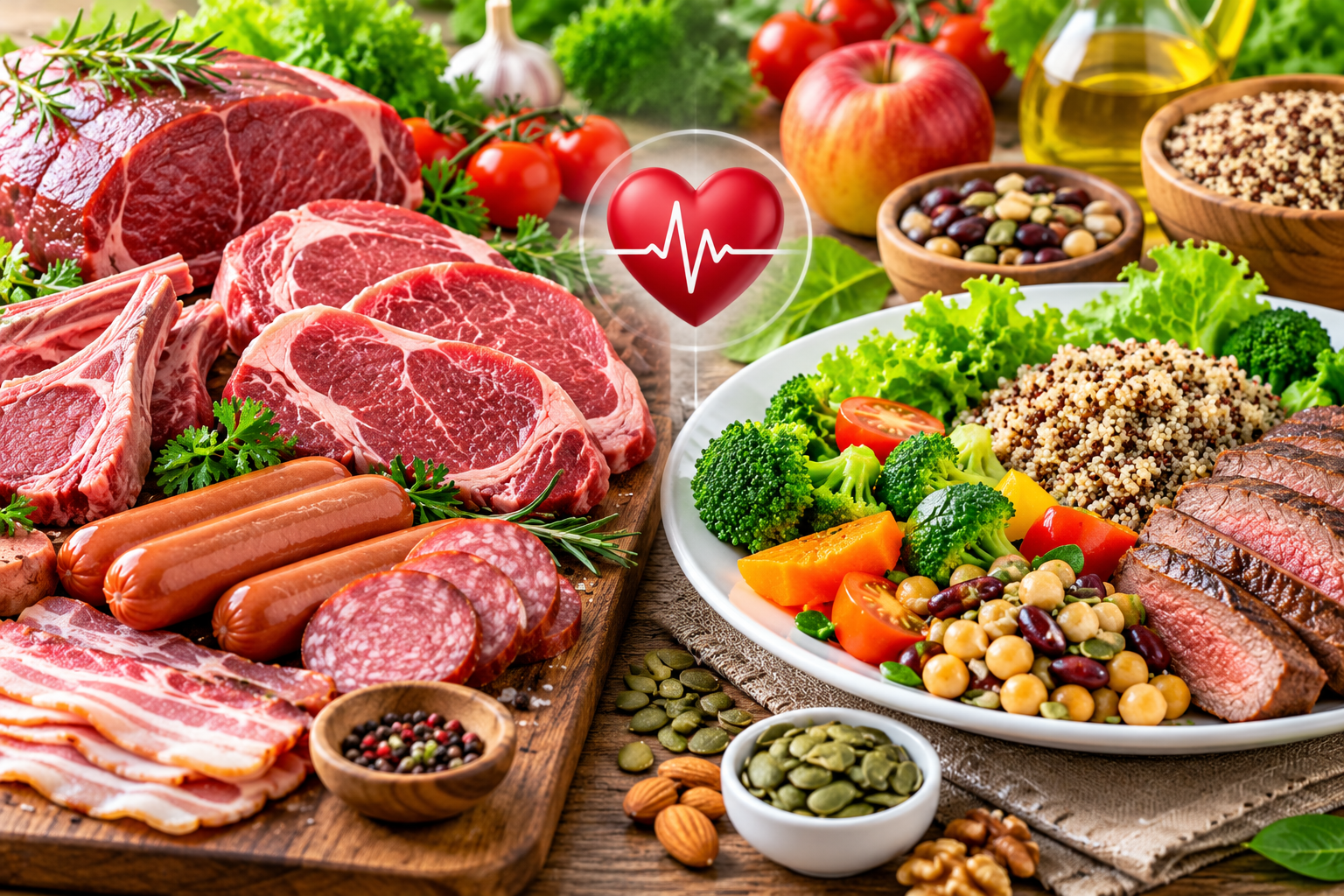
4. Cut back on processed meats, sugary drinks, and packaged snacks.
5. Use olive oil and eat fish, nuts, and seeds regularly.
6. Speak to a doctor or dietitian before making major dietary changes, especially if you have a medical condition.
References
A. Donat-Vargas, C., et al. (2021). High consumption of ultra-processed food is associated with incident dyslipidemia: A prospective study of older adults. The Journal of Nutrition.
B. Fekete, M., et al. (2025). The role of the Mediterranean diet in reducing the risk of cognitive impairment, dementia, and Alzheimer's disease: A meta-analysis. GeroScience.
C. Gu, J.-W., et al. (2025). Ultra-processed food intake and brain health in middle-aged and older adults. The Journal of Nutrition, Health & Aging.
D. Hengeveld, L. M., et al. (2019). Prospective associations of diet quality with incident frailty in older adults: The Health, Aging, and Body Composition Study. Journal of the American Geriatrics Society, 67, 1835–1842.
E. Jayanama, K., et al. (2021). Relationship between diet quality scores and the risk of frailty and mortality in adults across a wide age spectrum. BMC Medicine.
F. Kanbay, M., et al. (2025). The impact of ultra-processed food consumption on frailty and sarcopenia: A systematic review. Journal of Human Nutrition and Dietetics.
G. Lane, M. M., et al. (2024). Ultra-processed food exposure and adverse health outcomes: Umbrella review of epidemiological meta-analyses. BMJ.
H. Long, T., et al. (2022). Trends in diet quality among older US adults from 2001 to 2018. JAMA Network Open.
I. Lorenzo-López, L., et al. (2017). Nutritional determinants of frailty in older adults: A systematic review. BMC Geriatrics.
J. Mengist, B., et al. (2025). The risk associated with ultra-processed food intake on depressive symptoms and mental health in older adults: A target trial emulation. BMC Medicine.
K. Ni Lochlainn, M., et al. (2021). Nutrition and frailty: Opportunities for prevention and treatment. Nutrients.
L. Sandoval-Insausti, H., et al. (2019). Ultra-processed food consumption and incident frailty: A prospective cohort study of older adults. The Journals of Gerontology: Series A.
M. Struijk, E. A., et al. (2020). Diet quality and risk of frailty among older women in the Nurses' Health Study. The American Journal of Clinical Nutrition.
N. Weinstein, G., et al. (2025). Ultra-processed food consumption and risk of dementia and Alzheimer's disease: The Framingham Heart Study. The Journal of Prevention of Alzheimer's Disease.
O. Yang, Y., et al. (2025). Combined effects of diet quality scores and frailty on all-cause mortality and life expectancy in middle-aged and older adults. Nutrients.